

Cemetery history
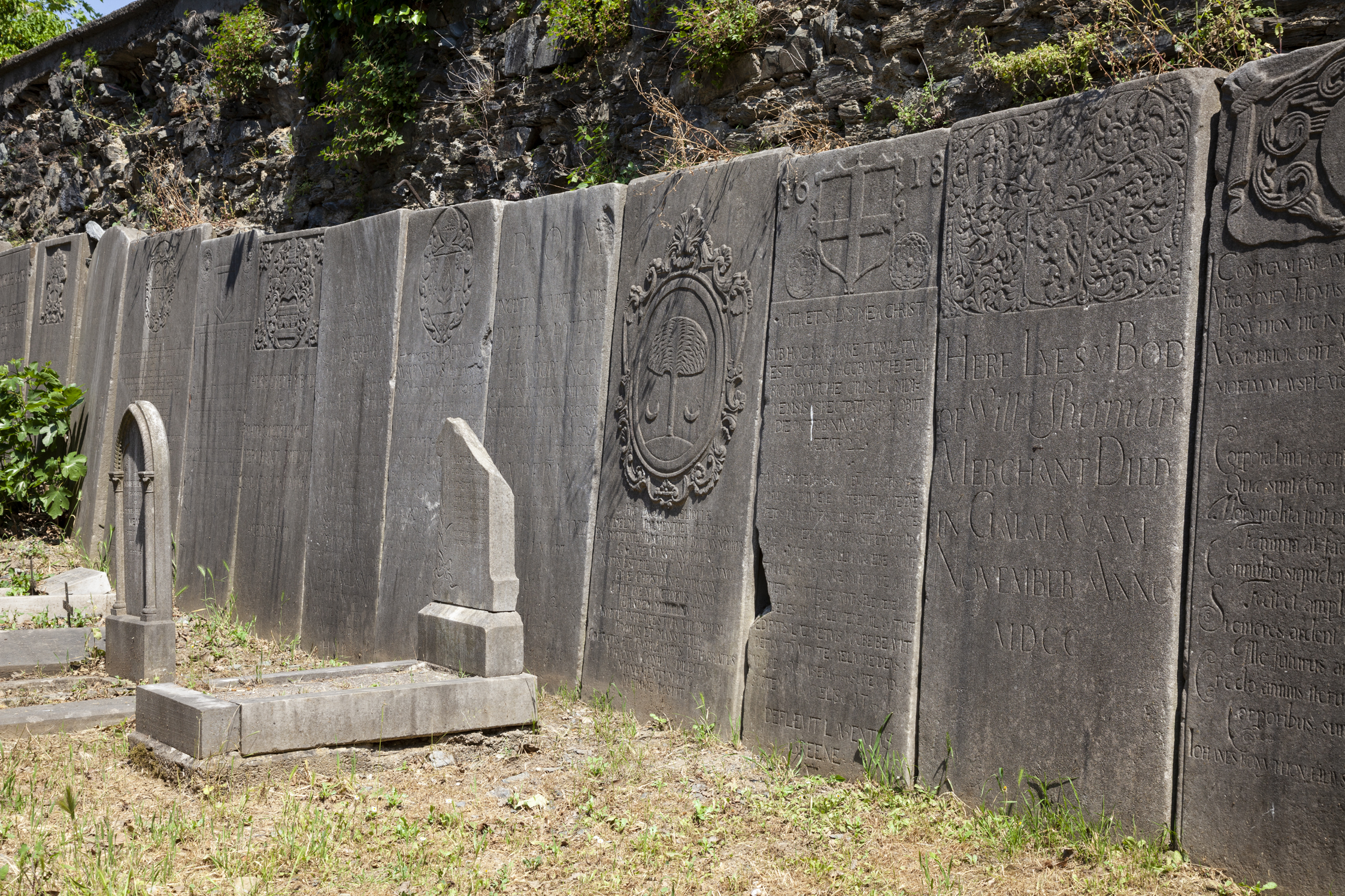
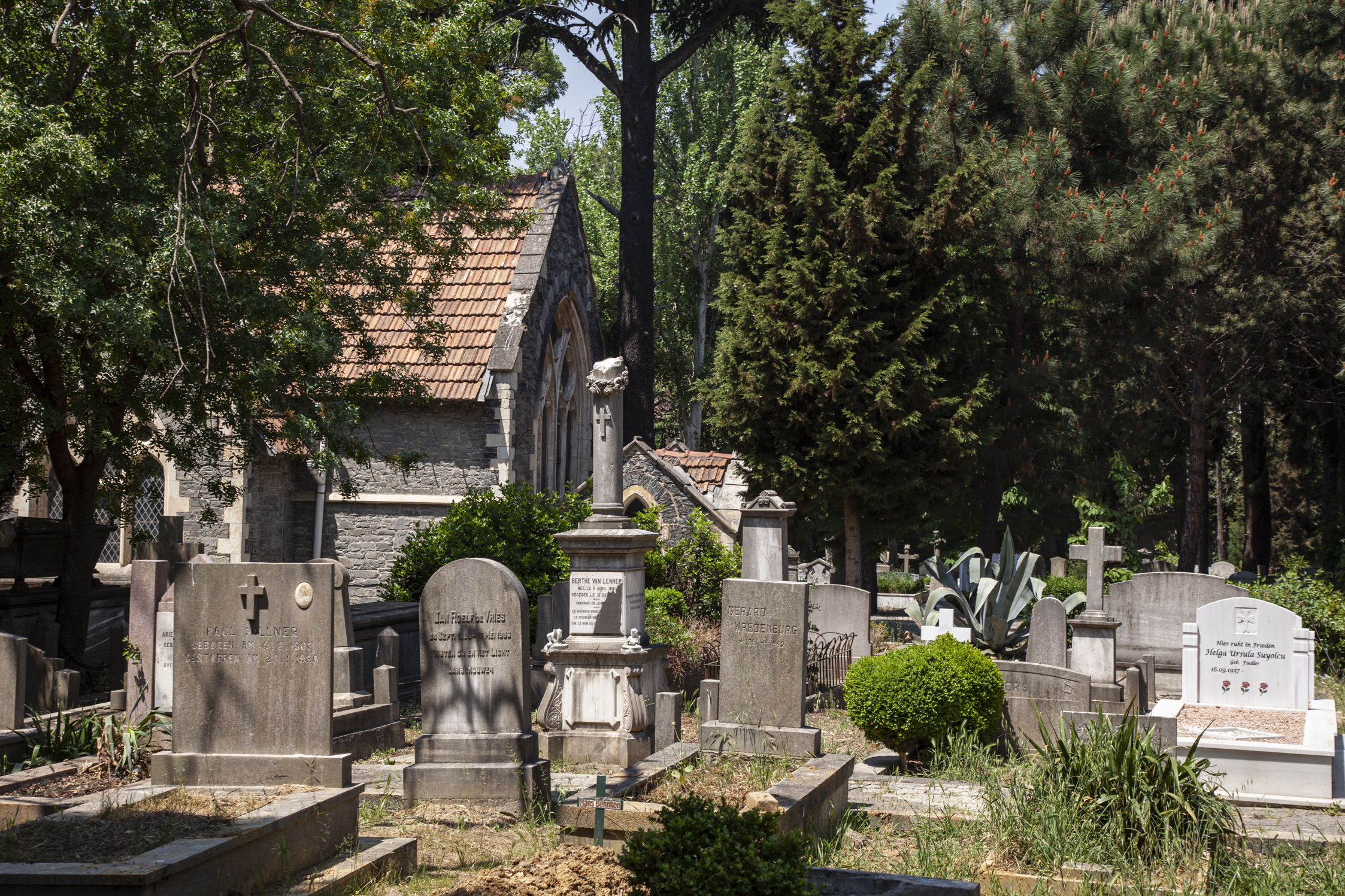
The origins of the Feriköy Protestant Cemetery date back to 1853, when the Ottoman government gave land in Istanbul’s Feriköy district as a burial ground for the city’s foreign Protestant and Catholic communities to replace an earlier cemetery, located in the city’s renowned necropolis of the Grand Champs des Morts.
In use since the sixteenth century, the old site had become a hindrance to urban expansion. The creation of the new cemetery, on what was then the city’s outskirts, not only provided more space for interments but also matched contemporary efforts in Europe to close inner-city graveyards and replace them with more hygienic burial grounds distant from settled areas.
The move to the new cemetery was postponed by the Crimean War, and in 1857, the land allotted four years earlier was considered insufficient to meet the needs of both Protestants and Catholics. Consequently, a separate site nearby for Protestants alone was granted to the embassies of several contemporary leading Protestant nations: Great Britain, Prussia, the United States of America, the Netherlands, Denmark, the United Kingdoms of Sweden and Norway, and the Federated Cities of the Hanseatic League. After negotiations and the approval of their governments, these embassies drafted operating statutes and agreed to share the duty and cost of managing the cemetery.
The first burial occurred in November 1858, and the Feriköy Protestant Cemetery opened officially in February 1859. Since that time it has served as the chief cemetery for Istanbul’s foreign Protestant (and otherwise non-Catholic or Orthodox) dead.
Cemetery landscape
The cemetery’s landscape is not significant
for its tidy, planned layout but to the contrary, for its unaffected natural
beauty and a wildness and abandonment that accentuates its romantic
charm. With many trees and rich foliage, the cemetery is a sanctuary of
nature. It is frequented by both local and migratory birds and is
also home to tortoises and lizards, not to mention abundant
insect life.
This ecological aspect is especially vital
today since the cemetery is one of very few green spots left in Istanbul’s
urban sprawl. It is a priceless gift to the city, which was created by
drift rather than by design.
Cemetery chapel

The single most important architectural
element in the cemetery is the chapel. Though no exact record has yet come
to light about who designed it or the precise date it was constructed, cemetery
accounting records clearly show that it was erected before 1868, in the
first decade after the cemetery opened (1859-68).
The chapel’s English, neo-Gothic style
resembles Beyoğlu’s Crimean Memorial Church, another Istanbul landmark
that was built in the same period. Both are linked to the burgeoning of
Istanbul’s Protestant community in the wake of the Crimean War and the creation
of new establishments to serve it, including the cemetery itself, as well as
the erection of monuments with Ottoman support to commemorate the assistance
and sacrifices of European allies in the conflict, especially Great Britain.
The chapel’s distinctive “English”
appearance is probably the main reason why the Feriköy Protestant Cemetery was
often referred to in the past as the “English Cemetery,” as seen on
nineteenth-century maps, photos, and postcards.
Important graves and monuments
Some of the important graves and monuments
at the Feriköy Protestant Cemetery are:
- For enterprise and celebrity – Franz
Carl Bomonti (1857-1903), Brewer - For literature and learning – John
Freely (1926-2017), Author, Teacher - For exploration and unconventionality – J.
B. Crighton Ginsburg (c.1826-1898), Preacher - For wealth and grandeur – Henri Maurice
Rampacher (1816-1866), Merchant - For education and creativity – Traugott
Fuchs (1906-1997), Scholar, Artist - For variety and inclusion – The Nakamura
Tombstone - For communal richness and vitality – The
Memorials of “Monument Row”
Cemetery significance

Despite its modest presence, the Feriköy Protestant Cemetery is a major historic landmark with an international legacy that reaches back much earlier than its opening in 1859.
The cemetery bears witness to the critical role of generations of Europeans and other Westerners in the social, economic, and political life of the Ottoman Empire and modern Turkey. It testifies to Istanbul’s communal diversity and richness. It is the last resting place of generations of individuals who left their mark both locally and beyond.
Besides this testament to the past, the cemetery offers proof of international union—a point that was underscored in an address by the pastor of the Prussian legation at the cemetery’s opening in 1859, when he praised the cooperative effort made to establish it by the foreign legations that represented the chief Protestant powers of the day: “. . . [All] members of the Protestant community,” he said, “. . . joined in harmony. The worldly authorities set an example. . . [This place] is—God willing—a permanent memorial to the union of Protestant princes and nations. . . .”
His words remain valid today. An active burial ground managed by a diplomatic governing board composed of the representatives of many nations, the Feriköy Protestant Cemetery is—as it has been throughout its history—a tribute to international unity and cooperation.
Cemetery management
The current governing board is comprised of the consuls general of Germany, the United Kingdom, the Netherlands, Sweden, Hungary, Switzerland, and the USA.
In 2018, the Feriköy Protestant Cemetery Initiative, a scholarly working group, was established to document and preserve the cemetery as a heritage site. Affiliated with six Turkey-based international research centers (the American Research Institute in Turkey, the Netherlands Institute in Turkey, the Orient-Institut Istanbul, the Hungarian Cultural Center, the Swedish Research Institute in Istanbul, and the British Institute at Ankara), the Initiative serves as an advisory group to the diplomatic governing board, the first such body in the cemetery’s history.
Address
Cumhuriyet Mahallesi
Abide-i Hürriyet Cd. No: 5
34380 Şişli, Istanbul
Turkey
Managing organization
Diplomatic Governing Board of the Feriköy Protestant Cemetery of Istanbul
Basic cemetery data
Year of first burial: 1858
Cemetery area: 1,42ha
Number of graves: approximately 1.000 marked gravesites
Number of burials: approximately 5.000