

Barcelona.
Establishment of ASCE

In 2001, it became clear that there was a need to highlight the rich
heritage of European cemeteries. Thanks to
Mauro Felicori
and his team, which at that time was represented by the
heads of 9 European cemeteries, including Barcelona, the
Association of Significant Cemeteries in Europe (ASCE) was set up
with the basic aim of promoting the recognition of European cemeteries as
cultural assets of exceptional importance and fostering awareness of them
among citizens and the main national and European institutions.
The growing interest on the part of different cemetery managers has
consolidated the project, with a total of
23 countries and 124 cities
that have joined, and which today make ASCE a European association of
reference. Barcelona has always been a very active member from its position
in the Steering Committee and for some years holding the presidency.
The impact of ASCE on cemeteries in Barcelona

The evolution of cultural activities in these 20 years has been astonishing
and exponential. The streets and squares of the different cemeteries in
Barcelona have witnessed and been the setting for
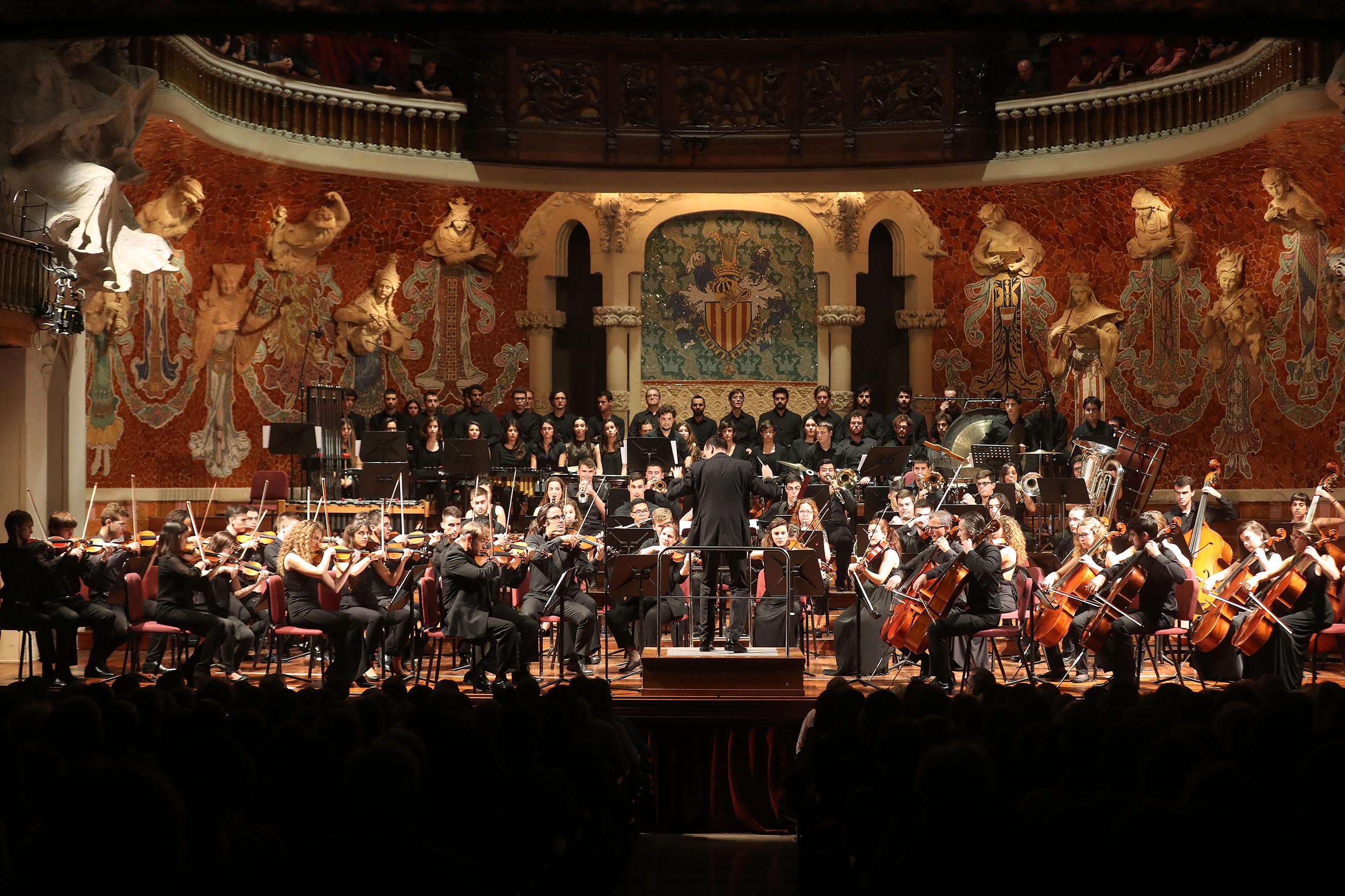
routes, concerts, open days, conferences, plays, musicals and, last
but not least, spaces in which to show new generations the wealth that
cemeteries contain.
It should be noted that the cultural change in our society has been an
important factor in the opening of the cemeteries to the city as cultural
spaces. Guided tours of the cemeteries are another of the city’s
attractions, and many people have chosen to take them and learn about the
history of Barcelona from the people buried in the cemeteries or the
sculptors and architects who left their works there. We would like to make
special mention of the different spaces that house cemeteries, in general,
considering them to be the depositories of a large part of the tangible and
intangible heritage that we are obliged to preserve and pass on to future
generations.


On the other hand, the possibility of establishing
collaborations with different entities such as the University of
Barcelona, the Miró Foundation, the Olympic Museum, among others, offers us
the opportunity to carry out interesting projects together, which
have subsequently served for students and scholars from different
disciplines.
Our ‘obsession’ over the last ten years has been to open ‘our open-air
museums’ to children,
offering schools different educational activities to bring the
cemeteries closer to the children so that they understand that cemeteries
are spaces full of history and stories and that they should not always be
perceived in a sad or negative way.
Barcelona has always wanted to be actively involved in the Association and
to collaborate in the projects that have arisen, to offer the public the
opportunity to get to know both Barcelona’s and Europe’s cemeteries more
closely. Thus, in the year 2012 it was possible to collaborate in the
Eucemet project by organising a photo
exhibition in the Funeral Carriage Collection in the Montjuïc
Cemetery. In this sense, and always pursuing the same objective of promoting
the value of cemeteries and making them known to society, we believe that
the ASCE’s promotion of the
Week of Discovering European Cemeteries (WDEC)
is fundamental.
The uniqueness of European Cemeteries Route

We would also like to make special mention of the
European Cemeteries Route, a project developed by the Association, which is conceived as
a network of cemeteries
which, by opening their precincts through cultural routes, makes this
important funerary heritage in Europe known in a joint way.
The itinerary generates an image with the capacity to
attract tourists who are looking for alternatives to the existing
offer.

We must highlight the uniqueness of this itinerary with respect to other
existing ones:
-
It is an itinerary aimed at all segments of the public: citizens of the
city itself, tourists, schools, groups, etc. -
The itinerary combines culture and nature (most of the cemeteries can be
considered as parks). -
The itinerary completes the existing cultural offer in the cities and in
Europe.
For them, communication tools common to all the cemeteries that take part of
the route were established, as well as communication actions aimed at
raising awareness of the route.
The importance of ASCE scientific committee
We do not want to end our article without making special mention of the ASCE
scientific committee created expressly to supervise the Association’s
work plan. Members contribute their
experience from different fields of work, which help to have a
broader vision when proposing new projects and new cemetery inclusions.
For 20 more years of heritage, culture, knowledge, and new experiences.
Miquel Trepat Celis
General Director of Cementiris de Barcelona
Cemetery Services Management
Cemeteries of Barcelona
You can access the original article
HERE.